

When Paradigms Die
They don't go quietly.

In a Beijing classroom in August 1966, a sixteen-year-old girl named Song Binbin watched her classmates beat the vice principal of the Girls’ Middle School Attached to Beijing Normal University to death with belt buckles, wooden boards, and clubs.
The vice principal, Bian Zhongyun, was fifty years old, the mother of four children, and had taught at the school for seventeen years. Her students had been her students that morning. By evening they had killed her in the school’s courtyard, and her body lay there for hours because nobody could be found who was willing to move it.
Calling those teenagers “psychopaths” is rhetorically satisfying and analytically lazy. The much harder and more useful reality is that they were responding to a coherent set of incentives. The class-status system that had guaranteed their university placements was eroding under reforms that rewarded competence over family background. Normal career paths had been suspended. Most consequentially, by late 1966, not participating in struggle sessions had become its own marker of suspicion.
The choice was between persecutor and persecuted, and the space between those positions had collapsed to nothing.
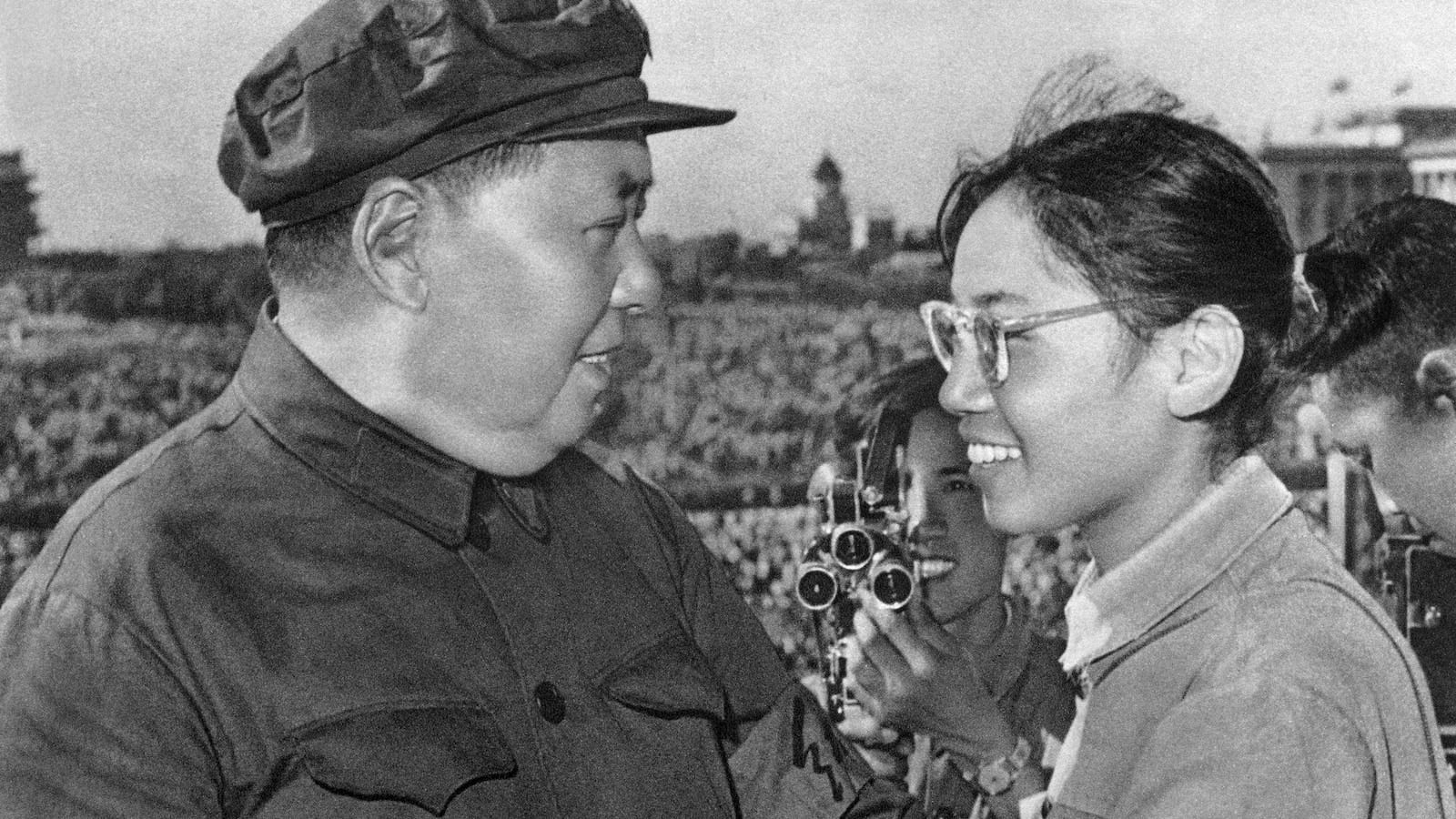
Two weeks after Bian Zhongyun’s death, Song Binbin stood on the rostrum at Tiananmen Square and pinned a Red Guard armband on Mao Zedong’s sleeve. The Chairman asked her name. Binbin meant gentle, refined. He suggested she change it to Yaowu, meaning be violent. She did, for a time.
The ideology was real. But the energy came from somewhere else.
A few weeks ago, considering the sort of awkward ideological interregnum American society currently finds itself in, I got caught up in the thought of trying to understand what happens when paradigms “die,” and the pattern is unsettlingly consistent across centuries, continents, and levels of violence. The Cultural Revolution is one example, and the most extreme one I will examine here, but it is not unique.
The same underlying structure appears in cases as different from each other as the collapse of imperial China, the violent dismantling of the samurai class in Meiji Japan, and the Soviet enforcement of pseudo-science against Mendelian genetics.
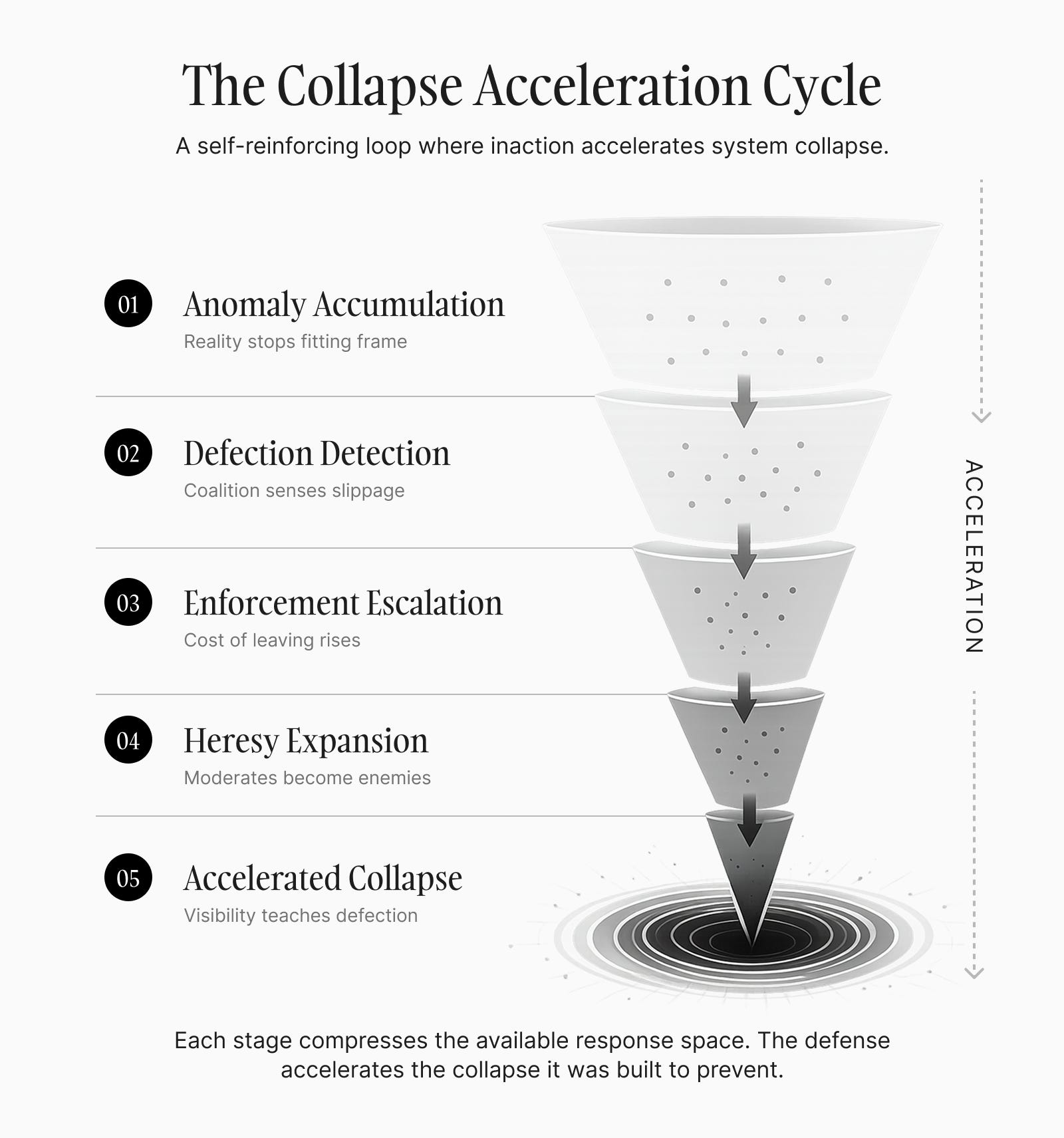
They share an architecture. A coalition senses its frame is slipping. It escalates enforcement against defectors. It expands the definition of heresy. It merges intellectual disagreement with moral disqualification. And in doing so, it accelerates the very collapse it is trying to prevent.
We are living inside one of these transitions right now. Almost nobody is describing it clearly. The work below is an attempt at a description.
A Paradigm Is a Coalition
In 1962, a philosopher of science named Thomas Kuhn published The Structure of Scientific Revolutions, which introduced an idea that has since escaped its original context and entered general use: the paradigm shift.
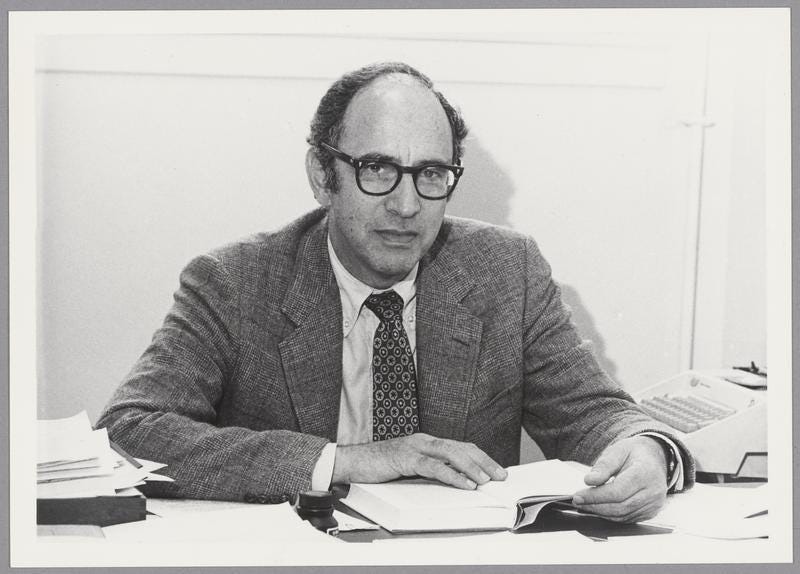
Kuhn’s argument was that science progresses through long periods of stable consensus (which he called “normal science”) punctuated by abrupt transitions when the reigning framework can no longer absorb its anomalies. The Ptolemaic model giving way to Copernicus. Newtonian mechanics giving way to Einstein. The old framework gets replaced wholesale, often over fierce resistance from practitioners who built their careers inside it.
Kuhn’s account of that resistance was primarily intellectual. Practitioners reject anomalies, add epicycles, and refuse to engage with rival explanations.
He underestimated his own theory.
The historical record shows the defense is almost always more aggressive than that, because a paradigm is a coalition first and a set of ideas second. The coalition’s members have built careers, institutions, reputations, and self-conceptions around the paradigm being authoritative.
When the paradigm is secure, the costs of membership are low and the rewards are high. As it weakens, the cost-benefit shifts, and every marginal member has increasing incentive to defect to whatever the successor framework will be. The coalition’s leadership notices the defections. It recognizes that defection past a threshold becomes irreversible. And it increases the cost of defecting through social, professional, and sometimes legal sanction. The escalation is entirely rational. A coalition trying to prevent its own collapse by making departure more expensive than loyalty.
What I have been trying to understand is the architecture of that escalation, because the historical cases share so much structure that they practically constitute their own minor field of study.
Three I will examine here in detail are the late Qing dynasty’s failed reforms between 1898 and 1912, the Meiji oligarchy’s violent dissolution of the samurai class culminating in the Satsuma Rebellion of 1877, and Lysenkoism in the Soviet Union from the 1940s through 1964.
Each shows the same architecture operating in radically different cultural and political contexts. Each ends in the collapse the defense was meant to prevent.
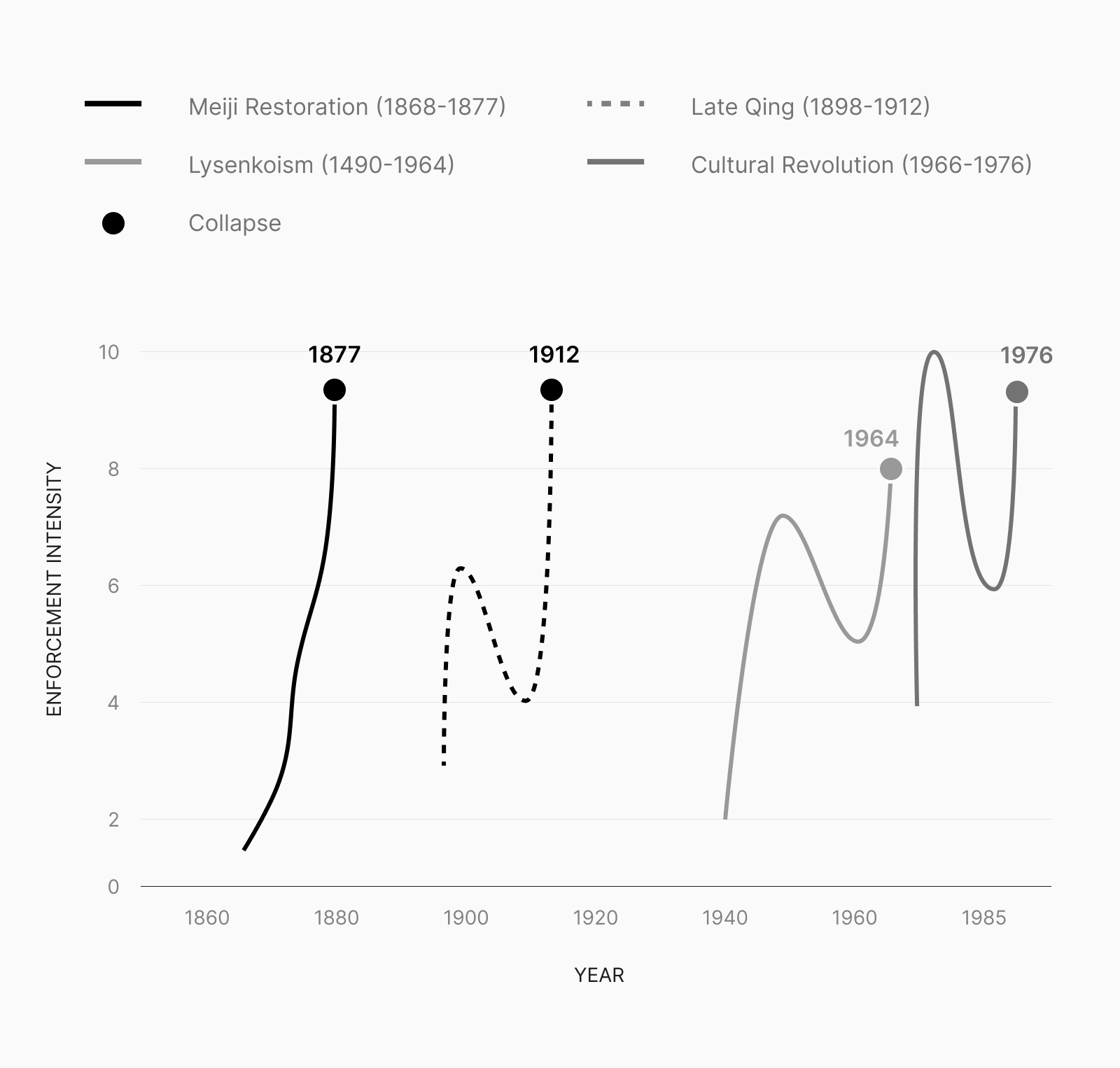
The Five Moves of a Dying Paradigm
Late-stage paradigm defense takes characteristic forms, and they are consistent enough across cases that you can practically use them as a diagnostic checklist.
The first is the expansion of the heresy category. As the paradigm weakens, more positions get coded as heretical, often positions that were previously tolerated within the paradigm itself. The boundary of acceptable disagreement narrows, and the narrowing is deliberate. A coalition compressing the space within which defection can happen by relabeling moderate positions as extreme. The compression tracks the perceived threat and bears little relationship to the actual content of the disagreement.
The second is the merger of intellectual and moral categories. When the paradigm was secure, disagreement was coded as wrong but not necessarily evil. As it weakens, disagreement gets coded as morally disqualifying. Heresy becomes an unforgivable sin rather than the annoyance it might have been considered before. The intellectual content of the disputes does not change nearly as much as the moral coding around them. The moral coding is doing the enforcement work that confidence used to do.
The third is the escalation of professional consequence. Early-stage paradigms tolerate disagreement because they can absorb it. Late-stage paradigms cannot tolerate disagreement because each visible dissident demonstrates to potential defectors that defection is survivable. The result is a sharp increase in the cost of dissent. Lost positions, lost funding, lost standing, sometimes lost freedom or life.
The fourth is the move from persuasion to enforcement through institutional capture. Late-stage paradigms increasingly use the state, regulatory bodies, professional associations, and other institutional levers to enforce orthodoxy that would not survive open argument. The capture is what makes the late stage feel oppressive even to people who agree with most of the paradigm’s substantive claims. The argument has been outsourced to enforcement because the argument can no longer carry its own weight.
The fifth, and the most important for predicting what happens next, is that the escalation accelerates collapse. Each high-profile excommunication produces some converts to the orthodox position and a larger number of quiet dissidents who now know the paradigm is fragile. Late-stage enforcement is visible to observers, and visibility teaches the lesson that the paradigm cannot defend itself by argument. Once that lesson is learned widely enough, the paradigm is finished, often quite suddenly.
The three historical cases I will examine each demonstrate these dynamics with unusual clarity, and each adds something the others do not.
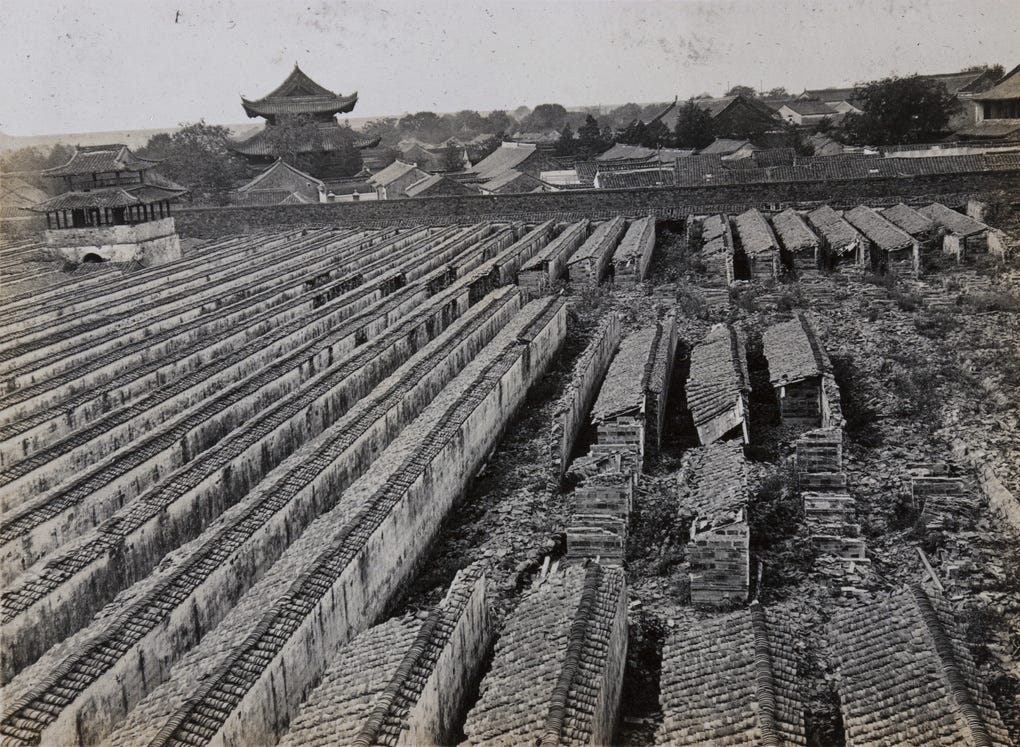
The Late Qing: A Paradigm That Tried to Reform Itself to Death
In the autumn of 1898, a thirty-year-old reformist scholar named Tan Sitong sat in his Beijing study and refused to flee. His friends had warned him. The Empress Dowager Cixi had launched a coup against the Guangxu Emperor three days earlier, the Hundred Days’ Reform was over, and the reformers who had advised the young emperor were being rounded up. Most of Tan’s colleagues escaped to Japan with the help of Japanese diplomats. Tan stayed.
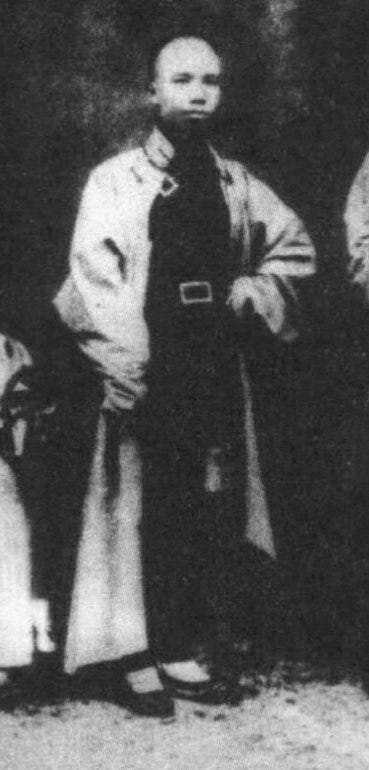
“Reform has never come about in any country without the flow of blood,” he is recorded as saying. “No one in China in modern times has sacrificed himself for the cause of reform, and because of this China is still a poor and backward country. Therefore, I request that the sacrifices begin with myself.”
He was executed at Caishikou marketplace on September 28, 1898, along with five other reformers. They became known as the Six Gentlemen of the Hundred Days. The crowd that gathered to watch was reportedly subdued, uncertain what the executions meant. The Confucian-imperial paradigm that had organized Chinese political life for two and a half centuries had just publicly killed its own attempts at self-reform.
The Qing dynasty had been under increasing pressure since the First Opium War of 1839-1842. By the 1890s the cumulative humiliations had become impossible to absorb within the existing paradigm. The Treaty of Shimonoseki in 1895, which ceded Taiwan to Japan and acknowledged Japanese suzerainty over Korea, was particularly devastating because it represented defeat at the hands of an Asian power that had been considered tributary just decades before. The Guangxu Emperor, then twenty-seven years old, had been persuaded by reformers including Kang Youwei and Liang Qichao that the dynasty could only survive through rapid modernization on the Meiji model.
The Hundred Days’ Reform launched in June 1898 attempted to do in three months what Meiji Japan had taken twenty years to accomplish. New schools were to be established. The examination system was to be revised. The military was to be reorganized. The bureaucracy was to be streamlined. The reforms were both too ambitious and too poorly implemented, and they alarmed the conservative faction at court led by the Empress Dowager Cixi. On September 21, Cixi placed the Guangxu Emperor under house arrest, where he would remain for the rest of his life. Most of the reforms were reversed within weeks.
This is the first move of paradigm defense. The conservative faction had defeated the reformers. The paradigm appeared safe.
Two years later the same conservative faction backed the Boxer Rebellion, a violent anti-foreign movement that promised to drive Western influence out of China through martial-arts mysticism and popular mobilization. The Empress Dowager declared war on the foreign powers in June 1900. The Boxers besieged the foreign legations in Beijing for fifty-five days. The Eight-Nation Alliance assembled a relief force, fought its way to Beijing, and occupied the city. The Empress Dowager fled to Xi’an in disguise. The Boxer Protocol of 1901 imposed indemnities equivalent to roughly seventeen times the Qing government’s annual revenue and stationed foreign troops in the country.
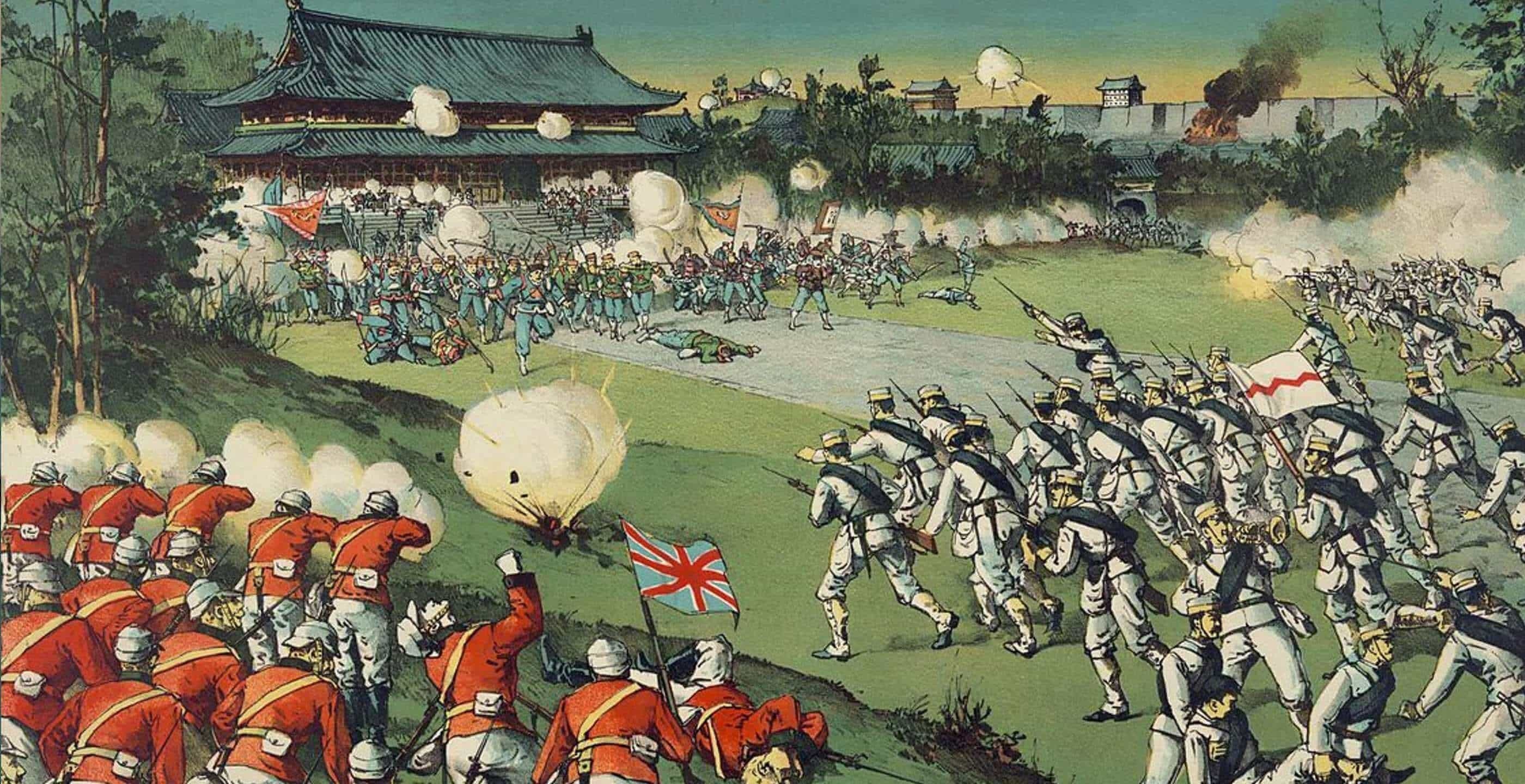
This is the second move. The defense that was supposed to shore up the paradigm produced the worst foreign humiliation in Chinese history. The conservatives had now delegitimized themselves with the educated Chinese elite, with the foreign powers, and with their own provincial officials, who had refused to follow the declaration of war and had negotiated separately with the foreign powers to maintain regional stability.
The Late Qing reforms followed from 1901 to 1911. The court, having tried suppression and then reactionary mobilization, now attempted the modernization it had executed reformers for proposing three years earlier. The reforms were comprehensive and desperate. The Imperial Examinations were abolished in 1905, which severed the central recruitment mechanism for the paradigm’s bureaucratic class and broke the linkage between elite Chinese family investment in Confucian education and political opportunity. Constitutional reform was attempted, with provincial assemblies established in 1909 and a national assembly in 1910. A modern military was built, including the Beiyang Army that would later produce most of the warlords of the Republican period.
This is the third move, and it failed for the reason the framework predicts. The reforms removed the structural mechanisms that had sustained the paradigm without successfully replacing them with mechanisms that could sustain a successor paradigm. The educated elite that would have staffed the new constitutional system had been raised under the old examination system and had built their careers around its content. The new military was loyal to its commanders rather than to the dynasty. The provincial assemblies became platforms for elite criticism of the imperial court rather than instruments of its modernization.
The Wuchang Uprising of October 10, 1911 began as a barracks mutiny by soldiers of the New Army in Hubei province. Within two months, fifteen of the eighteen provinces had declared independence from the Qing. The six-year-old emperor Puyi abdicated on February 12, 1912. The dynasty that had ruled China for two hundred sixty-eight years dissolved without a single major battle being fought in its defense.
The paradigm had tried to defend itself through suppression, through reactionary mobilization, and through controlled modernization. Each defense alienated a constituency that might have supported the paradigm. By 1911, no constituency remained. The defenders had spent fourteen years eliminating every group that might have fought for them.
Meiji and the Last Samurai
Thirty-five years earlier and seven hundred miles to the east, a different paradigm-defense episode had played out with different results.
In the predawn hours of September 24, 1877, on a hill called Shiroyama overlooking the city of Kagoshima, a forty-nine-year-old man named Saigō Takamori sat in the entrance of a cave dressed in the formal court robes of his rank and watched the Imperial Army artillery zero in on his position. He had perhaps three hundred men left, from a force that had once numbered thirty thousand. He had been wounded in the hip by gunfire. He could no longer walk. His last followers were preparing to charge down the hill into the Imperial lines, which would be the last cavalry charge of the samurai era.
Saigō asked his closest retainer, a man named Beppu Shinsuke, to behead him. Beppu performed the act with a single stroke, then led the remaining samurai down the hill to die. By 7 a.m. the rebellion was over. The body count for the day was approximately five hundred samurai. The Imperial Army losses were under a hundred.
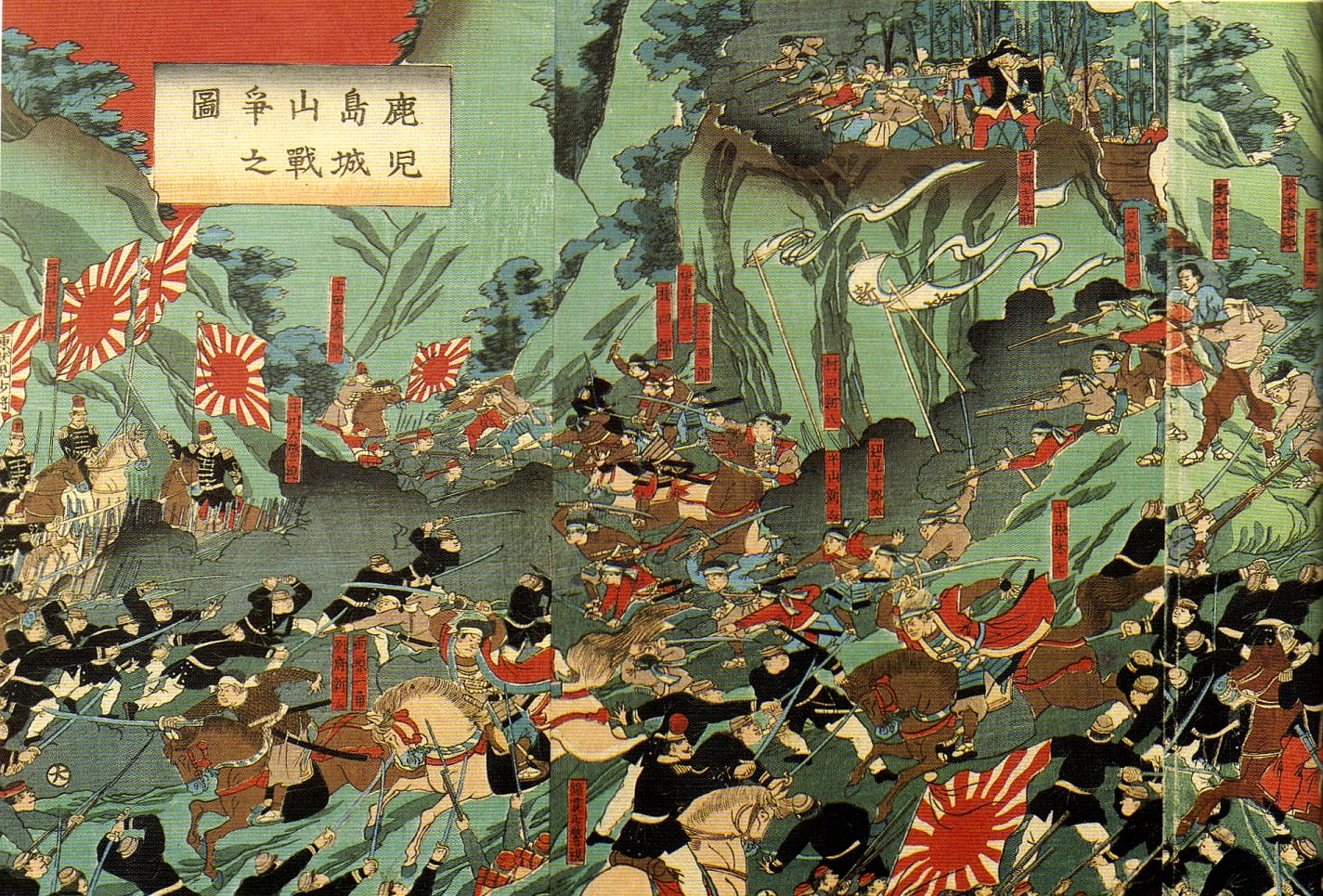
Saigō Takamori had been, less than a decade earlier, one of the architects of the Meiji Restoration that had now killed him. He had personally commanded the Imperial forces that defeated the last Tokugawa loyalists in 1869. He had served as one of the principal members of the new Meiji government, helped draft its foundational policies, and represented the regime during the Iwakura Mission years. His face appears on Japanese banknotes today. The Imperial Army that killed him had been built largely on his initiative.
The samurai paradigm that Saigō ultimately died defending had organized Japanese society for two and a half centuries under the Tokugawa shogunate. Samurai legitimacy rested on military function, hereditary status, and a Confucian ethical content that elevated bushido as a way of life rather than an occupation. By 1868, when the Meiji Restoration brought the young Emperor Meiji nominally to power, the samurai paradigm was clearly inadequate to confront Western military and economic pressure. The Meiji oligarchy, drawn substantially from samurai backgrounds in the Satsuma and Chōshū domains, set about dismantling the paradigm that had produced them.
The dismantling was rapid and comprehensive. The hereditary stipends that had supported the samurai class were converted to interest-bearing bonds in 1873 and then phased out. The abolition of the han system in 1871 eliminated the political-administrative units within which samurai had held office. The conscription law of 1873 created a national army that broke the samurai military monopoly. The Haitōrei Edict of 1876 banned samurai from publicly wearing swords, the visible badge of their status. Within eight years of the Restoration, the entire structural apparatus that had sustained the samurai paradigm had been demolished by the same coalition that had emerged from it.
The defense came from samurai who could not accept the dissolution. Several smaller rebellions occurred between 1874 and 1877. The Satsuma Rebellion under Saigō was the culmination. Saigō had resigned from the Meiji government in 1873 over the rejection of his proposed Korean expedition, which would have provided military employment for the displaced samurai class. He retired to Kagoshima and established private military academies that became gathering places for samurai discontent. The Meiji government, watching the academies grow into something that looked increasingly like a rival military force, attempted in early 1877 to remove arms from the Kagoshima arsenal. The local samurai rose under Saigō’s leadership.
The rebellion lasted nine months and was fought with a brutal asymmetry that the samurai paradigm had not anticipated. The Imperial Army, built on Saigō’s earlier initiative, was equipped with modern rifles, artillery, and telegraph communications. It used conscript infantry organized in Western tactical formations. The samurai forces relied on sword charges and traditional formations that had been the operative military doctrine for three centuries. At the Battle of Tabaruzaka in March 1877, the heaviest engagement of the war, the Imperial Army’s superior firepower destroyed the samurai assault despite the rebels’ superior individual training. The war was settled at Tabaruzaka. The remaining six months were a long retreat south through the Kyushu mountains to Saigō’s final stand at Shiroyama.
The case illustrates a different paradigm-defense pattern than the late Qing. The Meiji oligarchy had succeeded in installing a successor paradigm before the old paradigm’s defenders could mobilize. By the time Saigō raised his banner in 1877, the new conscript army existed, the new bureaucracy was functioning, the new educational system was producing students who would not be samurai, and the new economic structure was building the industrial base that would soon make Japan an East Asian power. The samurai defense came too late, against an opponent that had already established structural superiority. The defense was contained, brief, and final.
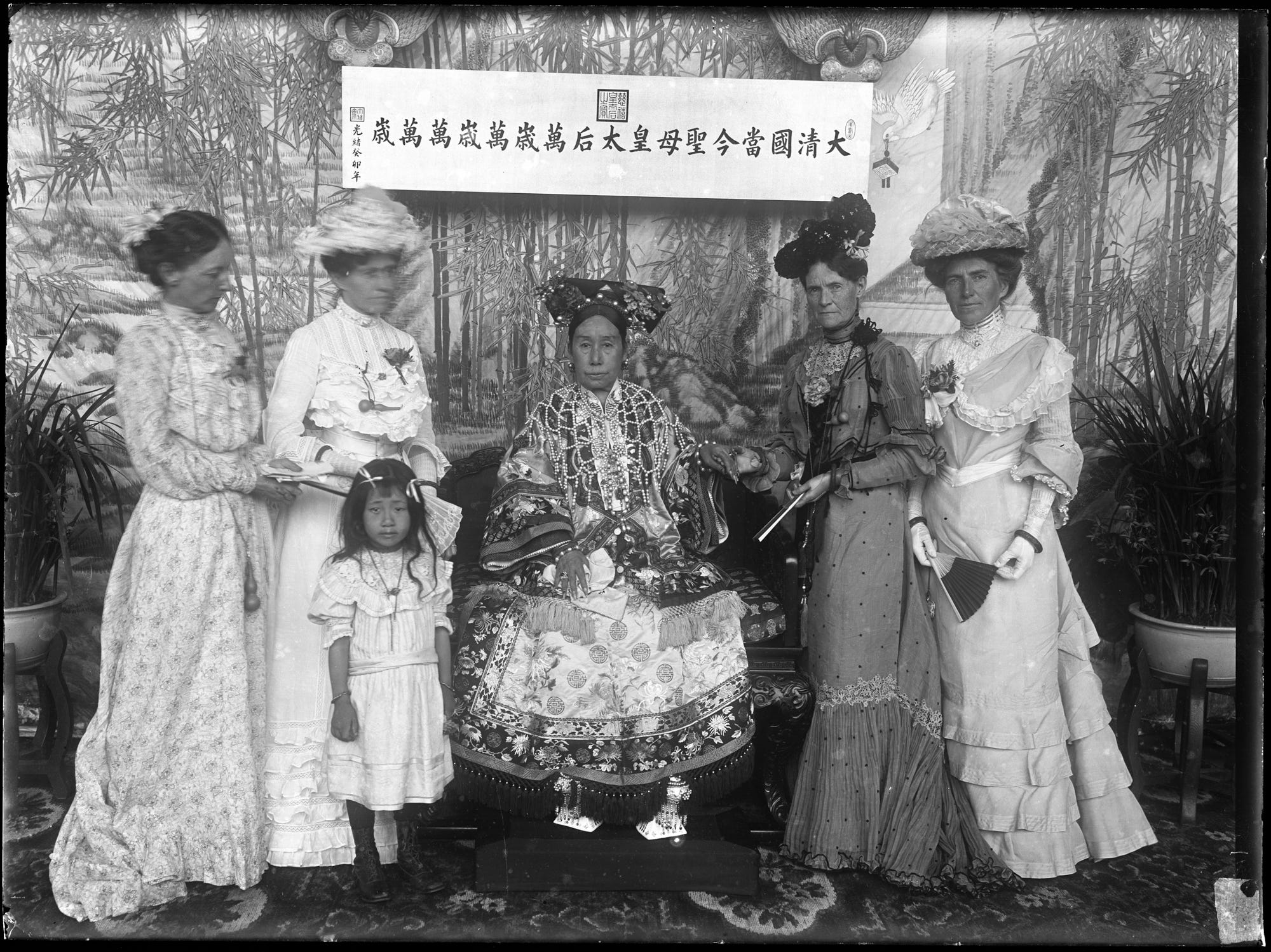
The contrast with the late Qing is the analytic payoff. Both cases involve East Asian states confronting Western pressure in the late nineteenth century. Both involve paradigm transitions managed by elites who recognized the existing paradigm could not survive. The Meiji case produced a controlled transition with a violent but contained final defense by a portion of the old paradigm’s defenders. The late Qing case produced an uncontrolled collapse after fourteen years of failed defensive moves that alienated every potential supporting constituency.
The same population could have had either outcome. The difference was in the elite handling of the paradigm-defense phase. Japan’s managed transition produced a rapid modernization that culminated in catastrophic war by 1945 and rebuild after. China’s mismanaged transition produced the warlord period, the Nationalist-Communist civil war, the Japanese invasion, and eventually the Cultural Revolution. Tens of millions of people died in the difference.
Lysenkoism and the Lethal Science
The third case shows the same architecture operating in a completely different cultural and political context.
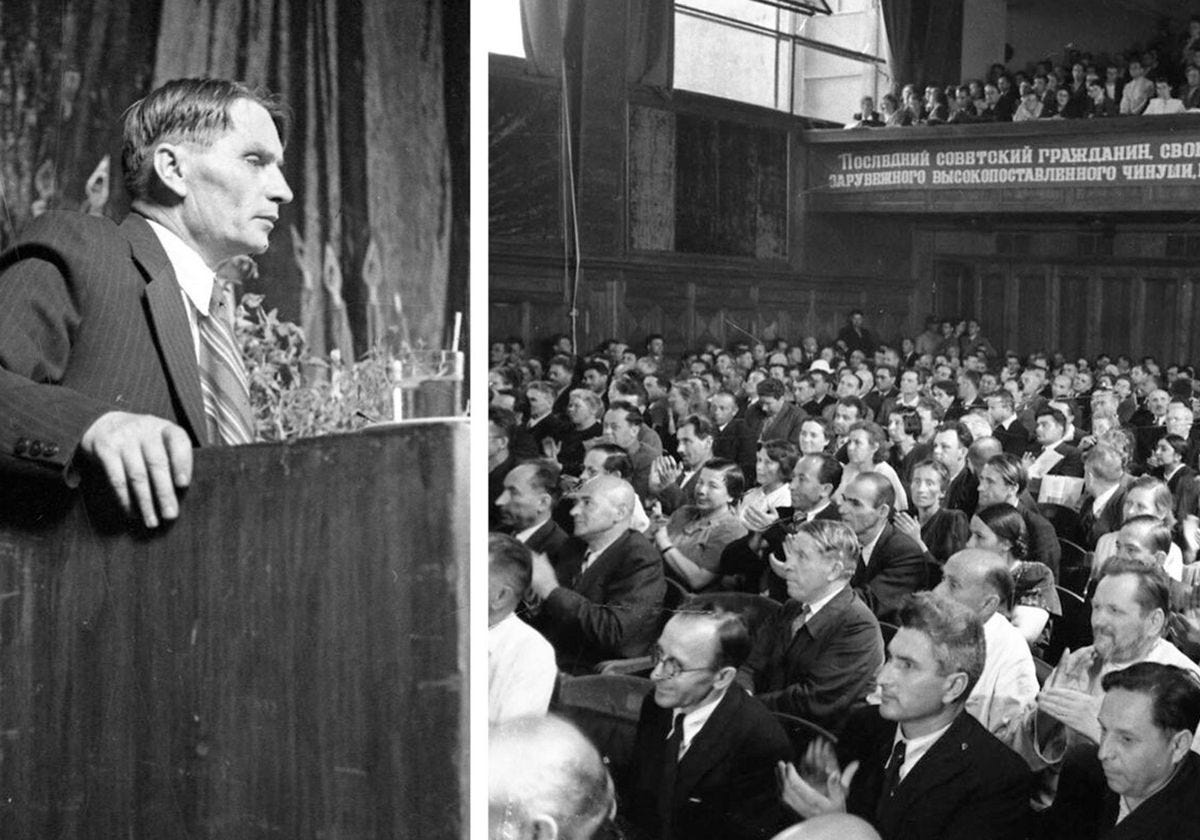
In August 1948, at the conclusion of a now-famous session of the Lenin All-Union Academy of Agricultural Sciences in Moscow, an agronomist named Trofim Lysenko announced that his views on heredity had been approved by the Central Committee of the Communist Party. The implication was unambiguous. Mendelian genetics, the operative framework for biological science globally, was now officially counter-revolutionary in the Soviet Union. Soviet biologists who continued to teach or research Mendelian genetics would face consequences. Within weeks, three thousand biologists had been dismissed from their positions. Within months, the entire field of Soviet genetics had been brought under Lysenko’s control or driven into hiding.
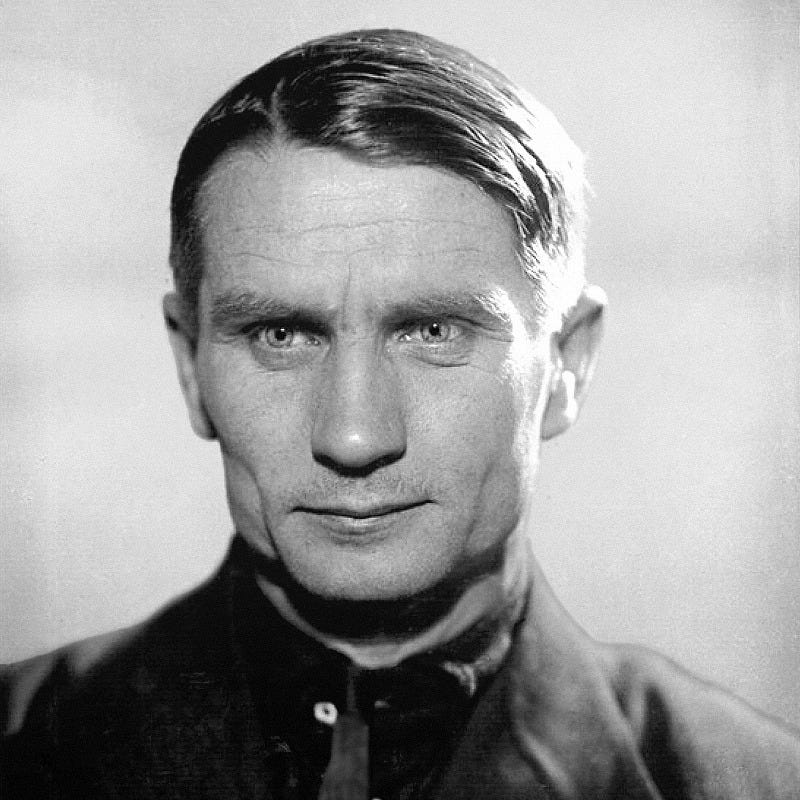
Lysenko had been promoting his alternative theory of inheritance, based on a misreading of Lamarckian acquired characteristics, since the early 1930s. His theory had several political advantages in the Stalinist context. It promised rapid agricultural improvements through environmental manipulation, which fit the Five Year Plan ideology of remaking nature through revolutionary effort. It treated heredity as malleable, which paralleled the Marxist-Leninist view of human nature as malleable. And it was associated with peasant practical knowledge rather than with bourgeois Western science, which fit the broader anti-cosmopolitan campaigns of the late Stalin period.
The empirical case for Mendelian genetics had been settled globally by the 1940s. Lysenko’s experiments did not replicate, his crop yields were fabricated, and his theoretical claims were inconsistent with the rapidly expanding body of genetic research being conducted in the United States, Britain, and elsewhere. The Soviet defense intensified anyway.
Nikolai Vavilov, the leading Soviet geneticist of his generation and one of the most distinguished biologists of the twentieth century, had been arrested in 1940 after years of conflict with Lysenko. He had built the world’s largest seed bank at the Institute of Plant Industry in Leningrad, traveled to five continents collecting plant specimens, and developed the theory of centers of origin that remains foundational in modern crop science. He was sentenced to death in 1941, the sentence was commuted, and he died of starvation in Saratov Prison in January 1943.
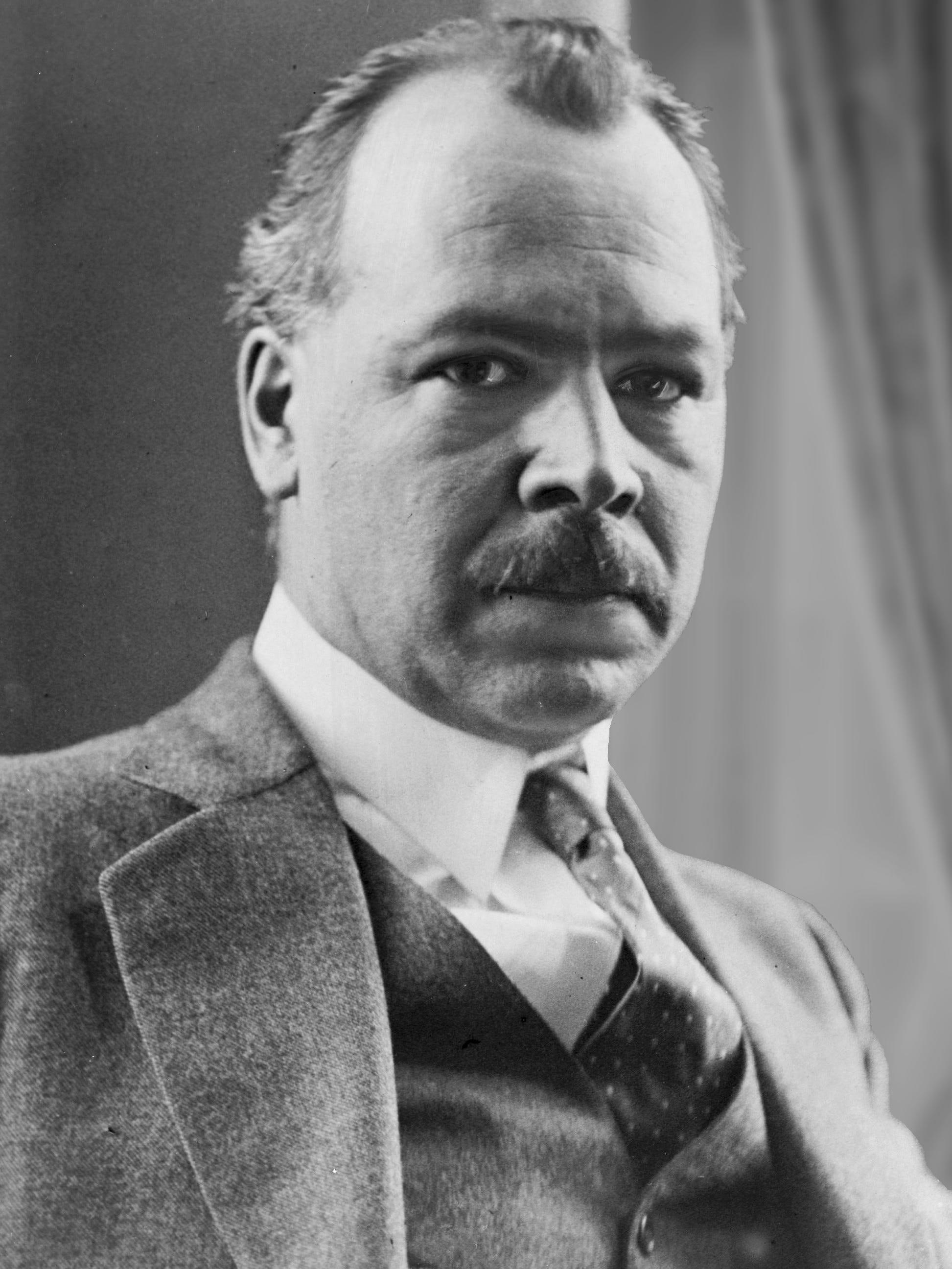
The Vavilov case is worth pausing on because it shows what paradigm defense looks like at the individual level when the institutional apparatus available for enforcement includes secret police and prison camps. Vavilov had been internationally famous. He had been elected to foreign academies. He had been received by foreign heads of state. None of it mattered once Lysenko had captured the Soviet biological establishment. The defense of the paradigm was sufficient justification for killing one of the most accomplished scientists of the era through neglect in a Soviet prison.
The paradigm held until Khrushchev’s fall in 1964 and was not formally repudiated until the late 1960s. By that point, Soviet biology was a generation behind the rest of the world. The country that had pioneered seed collection and crop science under Vavilov had become incapable of conducting basic genetic research. The enforcement that was meant to protect the paradigm had destroyed the institutional capacity that would have been needed for any transition to a successor paradigm.
When Lysenkoism collapsed, there was no Soviet genetics community ready to take over. There were only the surviving scientists who had spent twenty years hiding their actual views, and the next generation of students who had been taught a framework they were now expected to abandon.
The pattern is recognizable from the late Qing case. The defenders of a failing paradigm sometimes destroy the institutional infrastructure that would have been needed to manage transition to a successor paradigm. They prevent change by destroying the capacity for change. When the paradigm collapses anyway, as it eventually must, the collapse is worse than it would have been if managed earlier.
The Red Guards, Revisited
Different cultures, different centuries, same architecture. Three cases ranging from Confucian imperial bureaucracy through samurai military aristocracy to Soviet scientific orthodoxy, each showing the same five-stage defensive pattern, each collapsing in ways the defenders could not control.
The Cultural Revolution is the case that brings the framework to its limit, because it shows what happens when the paradigm-defense apparatus is turned outward toward the broader society rather than inward toward institutional adversaries. The dynamics are the same. The scale is different. The Lysenko purges killed thousands of scientists. The Cultural Revolution displaced or killed millions of people across every sector of Chinese society.
But the question that opens this piece is not how many died. It is who did the killing, and why.
The standard narrative on the Red Guards is ideological fervor. Mao called, and the youth answered. This narrative is comforting because it makes the Red Guards into a unique phenomenon, a one-time eruption of revolutionary madness that has nothing to do with normal human behavior under normal conditions. If the Red Guards were uniquely crazy, then the Cultural Revolution is a closed case. It does not have lessons for the present.
The historical record tells a different story. Andrew Walder’s research on Red Guard recruitment patterns, drawn from school records and contemporary accounts, shows that the early Red Guards were predominantly the children of Communist Party cadres and military officers. They were specifically the youth whose structural privilege was most directly threatened by the pragmatic reforms of 1962-1965, when the recovery from the Great Leap Forward had begun rewarding competence over class background.
Those reforms had begun opening university admissions to students from intellectual and bourgeois families because the country needed engineers and scientists. The cadre children, raised on revolutionary mythology and the expectation of preferred treatment, could watch their guaranteed advantage eroding in real time. When Mao offered them the chance to defend the revolution against revisionism, he was offering them a mechanism to halt and reverse a process that was disadvantaging them specifically.
This is the first incentive. The defense of the revolution was simultaneously the defense of the class-status system that had given them their advantage.
The career incentive was the second. Universities had closed by mid-1966. Normal career paths had stopped functioning. In their place, Red Guard leadership offered a new kind of career. Prominence in struggle sessions. Visibility in mass rallies. Organizational responsibility within factions that controlled access to denounced households, party records, and confiscated property. The chance to be received personally by Mao at the Tiananmen rallies of August through November 1966, an experience that became a credential deployable in later contexts. An estimated thirteen million Red Guards traveled to Beijing during this period.
For a teenager from a provincial city, the trip to Beijing to see the Chairman was the most important event of their lives to that point, and they understood at the time that it would matter for the rest of their lives.
The factional dynamics produced a third incentive. By 1967, the Red Guard movement had splintered into competing factions. Faction membership produced both protection and threat. Being in the wrong faction at the wrong time could result in physical violence from rival Red Guards. The factional competition turned the movement into a hierarchical organization with enforced loyalty, where individual participants had strong incentives to escalate their commitment to their own faction in order to secure their own safety.
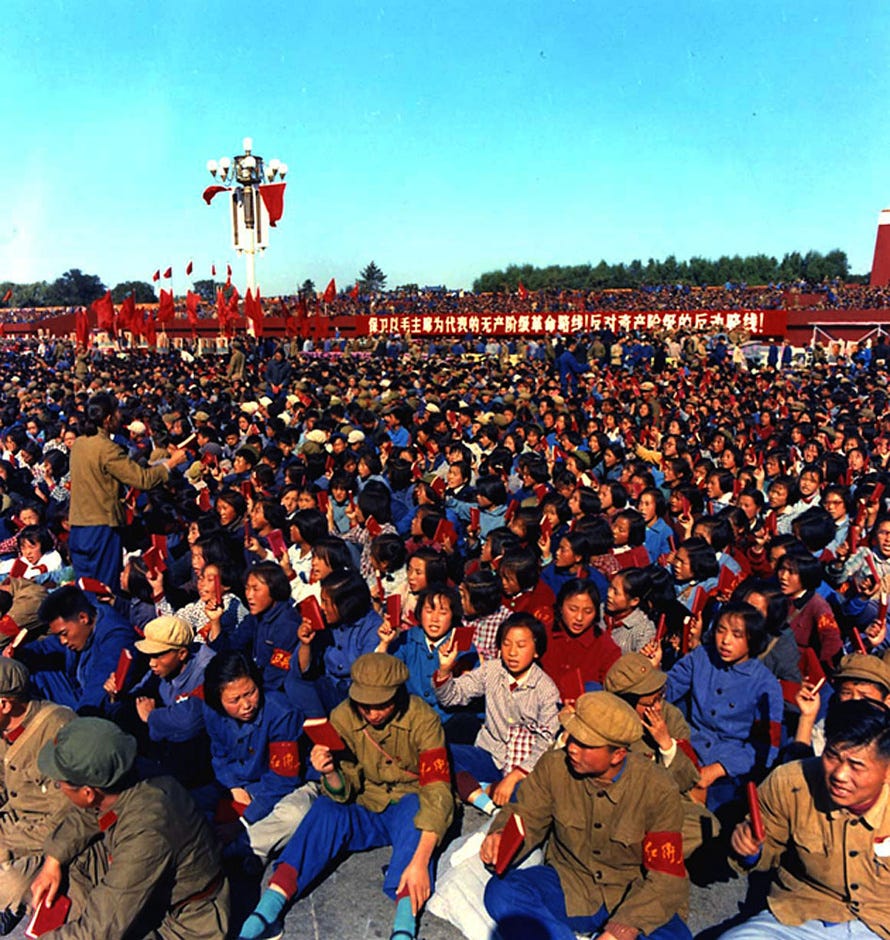
The safety incentive was the fourth, and may be the most underrated. By late 1966, not participating in Red Guard activity was itself a marker of suspicion. Students who declined to denounce teachers, refused to participate in struggle sessions, or expressed discomfort with the violence were liable to be denounced themselves. The choice was between participating actively, participating passively, or being targeted. Active participation provided protection. Passive participation invited scrutiny. Refusal invited destruction.
Many Red Guards described, in memoirs written after 1976, that their participation was driven substantially by fear of being targeted if they did not participate enthusiastically enough. This is the dynamic that produces active complicity in every paradigm-defense episode. The pressure to be visibly enthusiastic about enforcement as a form of insurance against becoming its target.
The identity incentive was the fifth. The Red Guard role offered Chinese teenagers a sense of historical importance that was not available through any other channel. They were not ordinary students. They were the vanguard of world revolution, personally entrusted by Mao with the task of saving the country from revisionism. The psychological power of this framing for adolescents who had grown up on revolutionary mythology cannot be overstated. The role transformed teenage anxieties about future and status into world-historical mission. The transformation was psychologically real, and it bound participants to the movement through identity stakes that operated independently of the material rewards.
When you add these five incentive structures together, you have a system that produced approximately what any such system would produce in any human population. Not because Chinese teenagers were uniquely susceptible to ideological madness, but because the incentive structures were aligned with paradigm enforcement, and human beings respond to aligned incentive structures with reasonable consistency.
Ideology supplied the justification and the coordination signal. Material interests, career incentives, status incentives, identity incentives, and safety incentives supplied the actual energy. This is the careerist reading of the Red Guards, and it is much darker than the madness reading because it implies that the conditions that produced Red Guard behavior are not specific to Maoist China. They are conditions that emerge whenever a paradigm under threat aligns enough incentive structures behind its defense.
Then the incentive structure shifted.
By 1968, Mao had decided that the Red Guards had served their purpose and were now a source of disorder. The Down to the Countryside Movement was launched at the end of 1968 and ran through 1980, sending an estimated seventeen million urban youth to rural areas for indefinite agricultural labor. The structural privilege they had mobilized to defend ended up destroyed in the process. The class-status system had been so disrupted by the chaos they helped create that it could not be restored to its pre-1966 form.
The true believers were devastated. The opportunists repositioned. The lost generation became the cohort most receptive to Deng’s market reforms in the late 1970s, because the political route to advancement had burned them once and they were not going back.
The Reformed Emperor
There is a figure who haunts the Cultural Revolution from inside the regime’s own success stories, and his case complicates everything the careerist framing of the Red Guards makes too clean.
In 1959, a fifty-three-year-old man named Aisin-Gioro Puyi walked out of the Fushun War Criminals Management Centre in northeastern China. He had spent the previous ten years there, undergoing systematic ideological reformation under a program the Chinese state had developed during the Yan’an period and refined for use on captured Nationalist officers, Japanese war criminals, and ideologically suspect intellectuals.
He had arrived at Fushun unable to dress himself or tie his own shoes, having been waited on by servants his entire life. The administrators of the program understood that personal helplessness and ideological pride were structurally connected, and that breaking the former was a precondition for restructuring the latter. By 1959 he could tie his shoes, raise vegetables in the prison garden, and produce extended written confessions of his past errors in the appropriate Marxist-Leninist vocabulary.
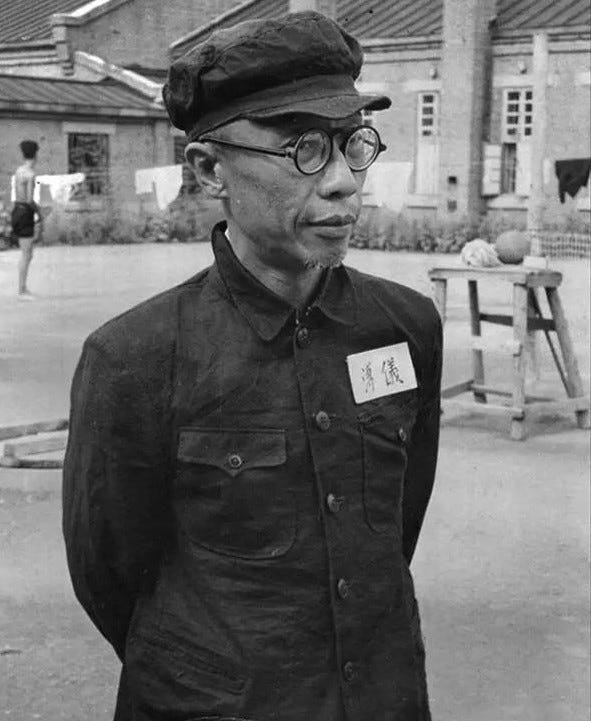
Puyi was the last emperor of China. He had been enthroned at age two in 1908, deposed at six in 1912 during the revolution that ended the Qing dynasty discussed earlier in this piece, restored briefly in 1917, installed as the puppet emperor of the Japanese-controlled state of Manchukuo from 1934 to 1945, captured by the Soviets at the end of the war, and handed over to the Chinese Communists in 1950. The years at Fushun were the longest period of stability his life had known.
After his release he worked as a gardener at the Beijing Botanical Gardens, married a hospital nurse named Li Shuxian in 1962, and wrote an autobiography titled From Emperor to Citizen that was published in 1964. The book is one of the most extraordinary documents of the Mao era. It describes his life as a sequence of progressively deepening errors that ended in genuine moral awakening through the patient reformation provided by the Communist Party. The framing is the official framing. The vocabulary is the official vocabulary. The conclusions are the official conclusions.
The question is whether Puyi believed what he wrote.
The honest answer, the one the historical record supports, is that he believed some portion of it and performed the rest, in proportions that no one, including Puyi himself, could ever cleanly separate. He reported, in private conversations with relatives and in his autobiography, that he had come to see his previous life as deluded, his collaboration with the Japanese as shameful, and the new China as a legitimate moral project that had improved the lives of the Chinese people. His half-brother Pu Jie, who underwent the same reformation, made similar reports independently.
The reform was not pure theater. Something in his actual self-understanding had been reorganized.
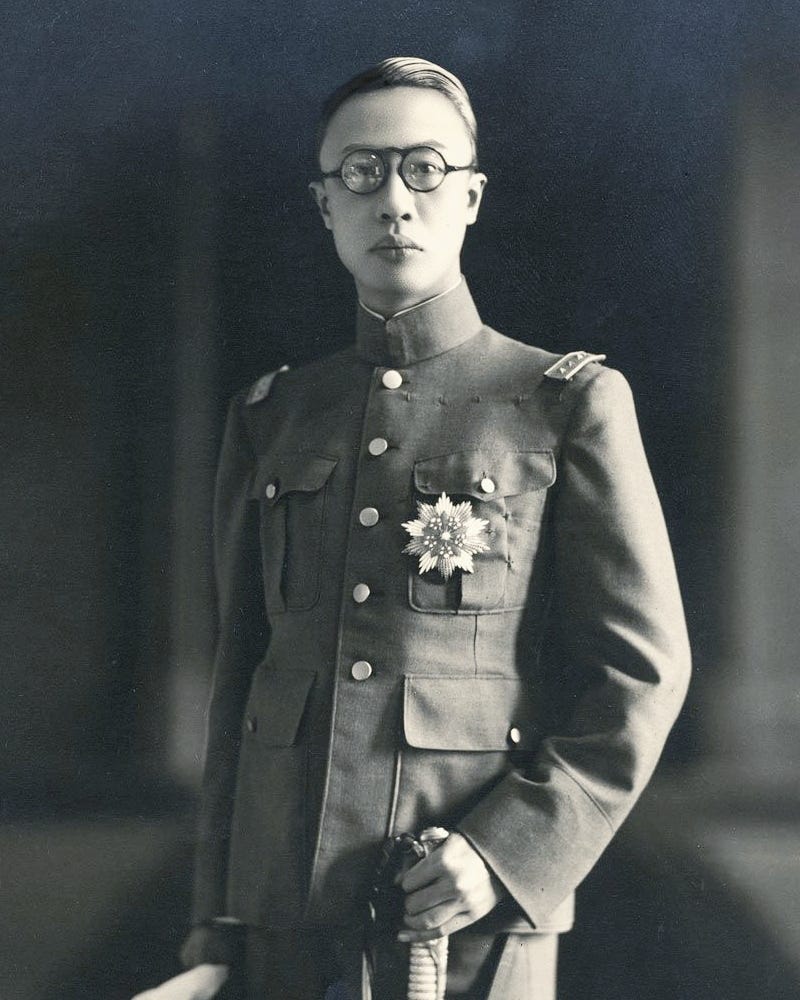
The performed element was also real. He knew exactly what his survival required. He produced the expected confessions and denounced his own past with the vocabulary the administrators provided. The performance was a survival strategy and he understood it as one. The opportunism was structurally necessary and he was not in a position to refuse it. His status as a successfully reformed emperor was useful to the state, which paraded him at official functions as proof that the program worked. Continued performance of the reformed identity was rewarded continuously throughout the rest of his life.
This is the part of paradigm-defense analysis that the careerist framing of the Red Guards does not fully reach. The opportunist-versus-true-believer binary is analytically useful but psychologically thin. Real reform produces real changes in self-understanding that are not reducible to performance. Real performance produces effects on belief that are not reducible to opportunism. Puyi sat inside the structural ambiguity for the rest of his life, and the ambiguity was not a moral failing on his part. It was the actual condition of being a human being subjected to sustained ideological pressure by a state that had absolute power over his physical existence.
By the time the Cultural Revolution began in 1966, Puyi was a publicly model reformed citizen. Married, employed, writing supportive editorials about the revolutionary process. His former servants and minor relatives were being denounced as feudal remnants. His autobiography was being criticized as insufficiently self-critical. He himself was protected from the worst of it by Zhou Enlai’s direct intervention, but the protection was provisional.
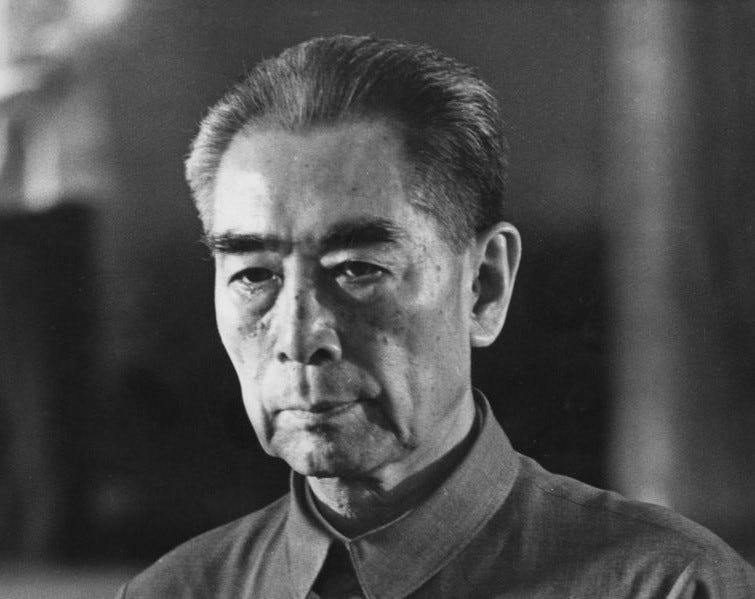
He died of kidney cancer on October 17, 1967, having been refused proper medical care at the hospital because of his class background until Zhou once again personally intervened. But the intervention came too late to save him. The reformation that had restructured his identity over a decade did not protect him from being killed, slowly and bureaucratically, by the paradigm whose triumph he had been used to demonstrate.
The Red Guards who attacked his physicians in 1967 included people who had been children when his reformation was completed. They had grown up on the official story that the program worked, that even the last emperor could become a citizen, that the new China could absorb and transform anyone. They were now killing the people whose absorption had been used as evidence for the absorption’s possibility.
The paradigm was eating its own demonstration cases. The model workers, the rehabilitated landlords, the reformed intellectuals, the Soviet-trained engineers who had been publicly praised in the 1950s were all liable to be denounced in the 1960s by the children of the people who had once praised them. The system did not honor its own success stories. It used them while they were useful and discarded them when the next phase of enforcement required new targets.
There is a non-cynical observation worth making about this.
Some participants in any paradigm-defense episode are genuinely transformed by it, in ways that are real even when the transformation includes opportunistic elements. Those participants tend to be the ones who suffer most when the paradigm shifts again, because they cannot smoothly reposition. The opportunists who never converted have nothing to lose by re-converting to the next paradigm. The true believers who actually reformed have lost the identity they spent years building.
This is a recurring feature of paradigm-defense episodes that should produce more compassion for true believers than they typically receive, even from people who disagree with what they believed. The true believer is the one paying the highest price for a coordination device that the opportunists were using and discarding throughout.
Puyi was a true believer, in the limited sense that any of his belief was real, and his belief did not save him. The paradigm killed him at the moment of its greatest apparent triumph, and the killing was bureaucratic, slow, and absolutely indifferent to the conversion the paradigm had spent ten years producing in him.
Preference Falsification and the Speed of Collapse
There is a concept from the economist Timur Kuran that helps explain why paradigm collapses feel so sudden when they finally arrive: Preference falsification.
The idea is very straightforward. In environments where holding a particular view carries social or professional cost, people will publicly profess beliefs they do not privately hold. Each individual’s public conformity reinforces the perception that the paradigm is universally supported, which increases the pressure on others to conform, which produces more false signals of support. The system appears stable, but the gap between public performance and private belief widens steadily with each enforcement cycle.
The late Soviet Union is the cleanest illustration. By the mid-1980s, the official ideology had been privately abandoned by the vast majority of the population, including many of the people whose jobs required them to enforce it. But each individual assumed that everyone else might still believe, because the public signals all pointed toward belief. Party functionaries gave the speeches. Citizens attended the rallies. Institutions performed the rituals. The maintenance of public conformity sustained the appearance of consensus that did not actually exist.
When Gorbachev’s reforms cracked the enforcement apparatus just enough to demonstrate that dissent was survivable, the cascade was extraordinarily fast. The population in 1989 was discovering, all at once, that everyone else’s mind had already changed years ago. The speed of the collapse was proportional to the gap between the public performance and the private reality. The wider the gap, the faster the cascade, because there was less genuine conviction to overcome.
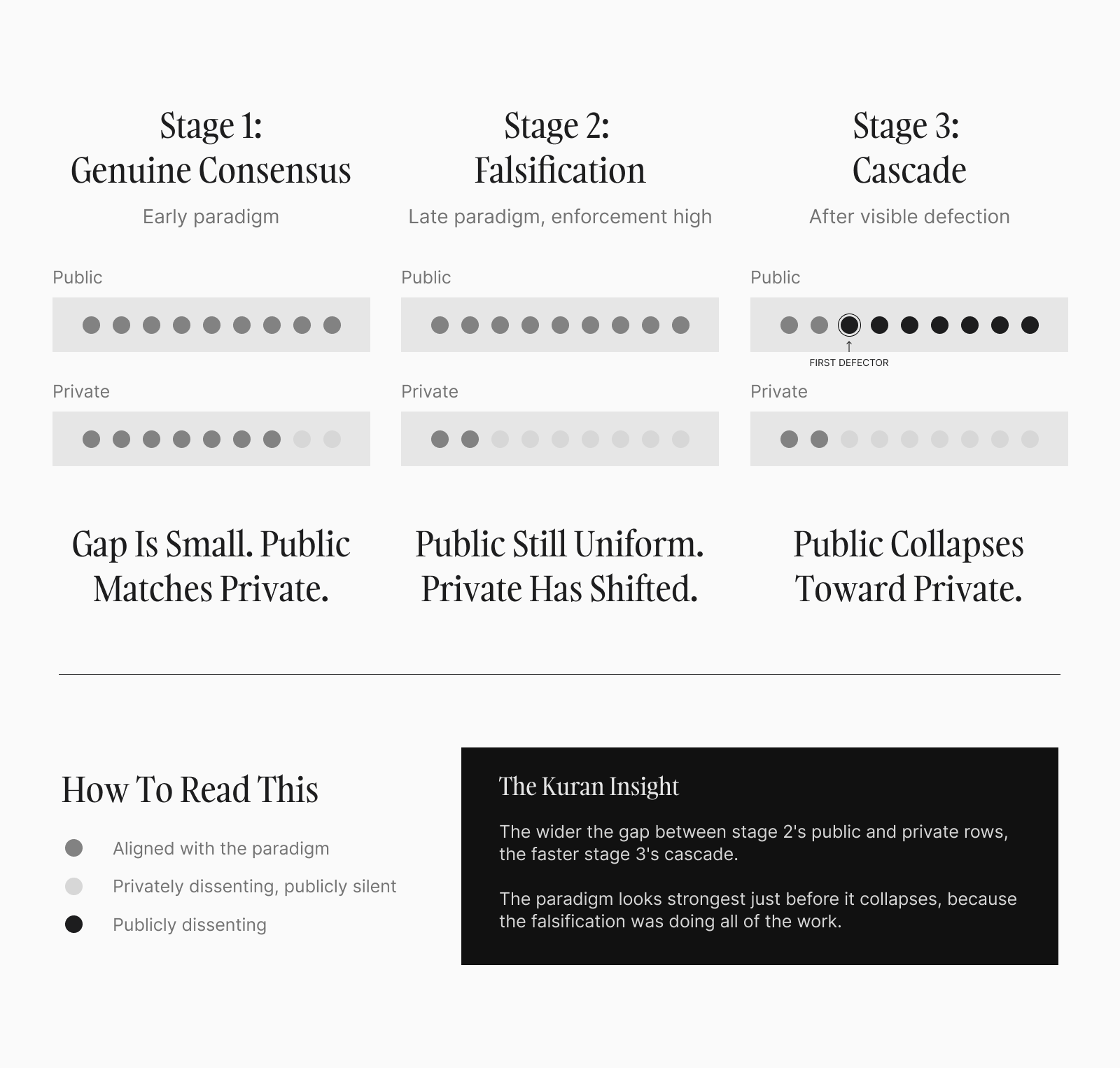
This explains why paradigm-defense episodes that rely on enforcement after persuasion has failed are structurally fragile. Every act of enforcement that produces public compliance without private conversion widens the gap between surface and substrate. The paradigm looks stronger with each successful enforcement action, even as it becomes more brittle, because each coerced conformist is a future defector waiting for the signal that defection is safe. The signal, when it comes, can be remarkably small relative to the cascade it triggers.
A few prominent defections. A shift in institutional leadership. A lost election. A policy reversal at a single major organization. Any of these can serve as the coordination signal that tells the falsifiers that others are moving and they can move too.
The contemporary West has just lived through a compressed version of this cycle. Positions that were mainstream in 2012 became professionally dangerous by 2020, and positions that were professionally dangerous in 2020 are voiced freely in 2026, sometimes by the same institutions that had been enforcing against them. The speed of the reversal suggests a preference-falsification gap that was wider than the enforcers understood.
But the more interesting question, the one the historical cases all point toward, is what comes after.
The Interregnum
What follows a paradigm collapse is an interregnum, borrowing from Gramsci’s line that the old world is dying and the new world struggles to be born. The old paradigm has lost enforcement capacity, but no replacement has consolidated. Former enforcers are still in position, still partially aware their authority has evaporated, unable to bring themselves to acknowledge it publicly.
Historical interregnums share features very much worth recognizing.
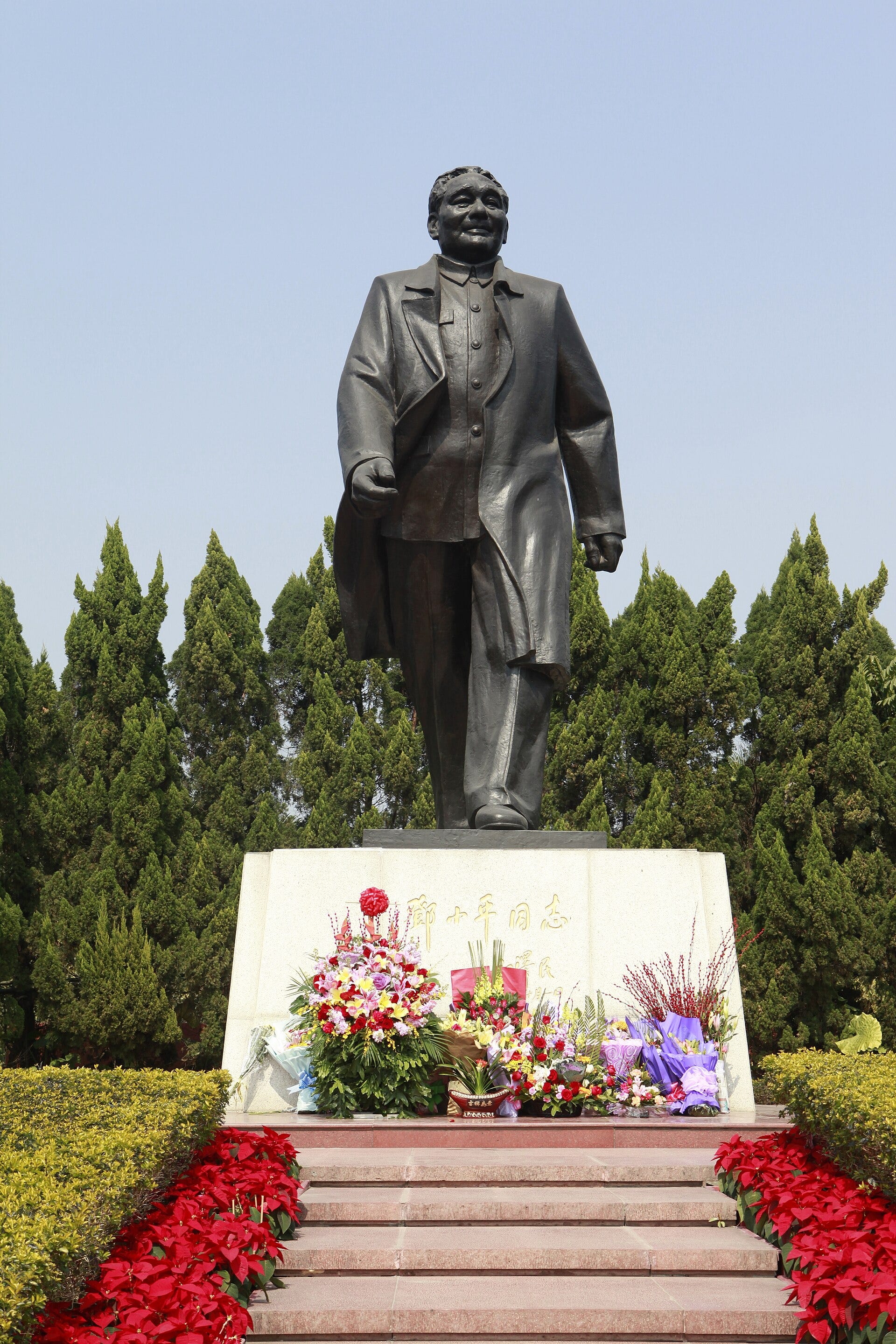
Post-Mao China took roughly fifteen years to consolidate a new operating framework under Deng. The post-Soviet settlement in Russia took most of the 1990s to produce a recognizable successor regime, and arguably is still being contested in the form that emerged under Putin. Meiji Japan took twenty years after the Satsuma Rebellion to consolidate the modernization paradigm that would carry the country into the twentieth century. The enforcement collapses quickly. The replacement settlement takes much longer.
Former enforcers do not generally repent or convert. They mostly do one of three things. Performative continuation, where they keep saying the things they used to say in the same forums, increasingly to audiences that no longer respond, until they retire or are replaced. Silent repositioning, where they stop saying the controversial things, gradually shift their language into more defensible territory, and pretend their previous positions had always been more nuanced than they actually were. Or genuine public reckoning, where someone writes the essay or book that says, this is what I did, this is what I now think I got wrong, this is what I have learned. The third group is small but disproportionately influential because their writing tends to set the terms by which the period is later understood. The first two groups produce no durable contribution to the new synthesis.
Both sides typically miscalibrate the risks. The optimistic side assumes the new settlement will be the natural restoration of pre-collapse conditions. This almost never happens. Post-Reformation Europe was not a restoration of pre-Reformation Catholicism. The post-Soviet settlement in Russia was not a restoration of pre-Soviet conditions. The pessimistic side predicts catastrophic regression. This also rarely materializes. What emerges is usually a messy contest of partial frames, most institutional life continuing under less ideological pressure in a muddled middle that satisfies nobody completely.
The Descriptive Position
The implication of all of this, if you are trying to write or think clearly during a paradigm transition, is that the costs of explicit dissent will be high right up until they are not, and the transition will be sudden. People treated as beyond the pale for views that recently qualified as mainstream will find themselves treated as obvious within five to ten years, sometimes (often, even) by the same people who were enforcing the orthodoxy against them.
This is an observation about structure, about what paradigm shifts look like in real time, regardless of which paradigm is dying. The enforcers and the enforced often end up on the same side of the new paradigm, and the enforcers usually do not acknowledge that they switched.
The writing that matters in these moments, the writing that will still be cited when historians try to understand what happened, is writing that describes the transition’s structure without partisanship for either the dying paradigm or its opposition. The defenders of a collapsing paradigm cannot write its honest history because the history indicts their enforcement. The opponents can write polemic but not analysis. The descriptive observer who treats the period as a case study inside a longer historical sequence is the one whose work survives.
The defensive escalation itself is the tell. Confident paradigms absorb dissent. Paradigms in their late stage cannot afford to, and the aggression with which they pursue dissenters marks the phase of the cycle more reliably than any other signal.
When you see it, you know the paradigm is dying, and the work that will endure is the work that describes the late stage as the late stage rather than fighting within it.
The teenagers in the Beijing courtyard in August 1966 were not crazy in the traditional sense. They were sixteen years old and they were responding to incentive structures that the paradigm’s defense had constructed around them. The vice principal they killed had been their teacher. The vocabulary they used to denounce her had been supplied. The protection they sought through enforcement was real, and so was the danger if they declined to enforce. They acted reasonably, in a structural sense, and their reasonable action killed a fifty-year-old woman who had four children and had taught at their school for seventeen years.
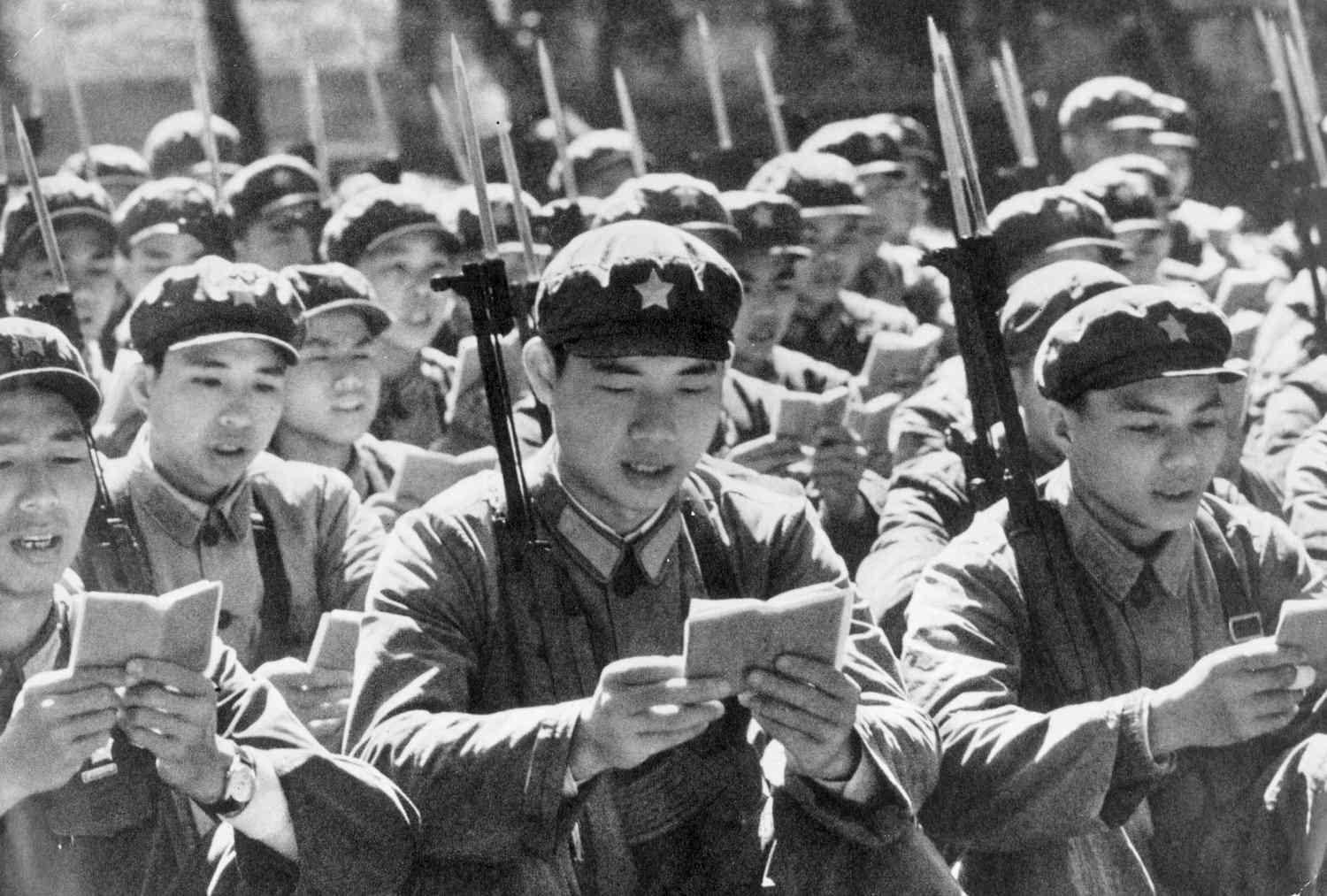
This is what paradigm defense looks like at its worst. The participants experience themselves as historically necessary. The structure that produced them is invisible to them from inside. The structure becomes visible only after the paradigm collapses, and by then the participants have either repositioned, gone silent, or been destroyed.
I intend to keep describing the structure while it is still operating. If the work is useful to you, pass it along.